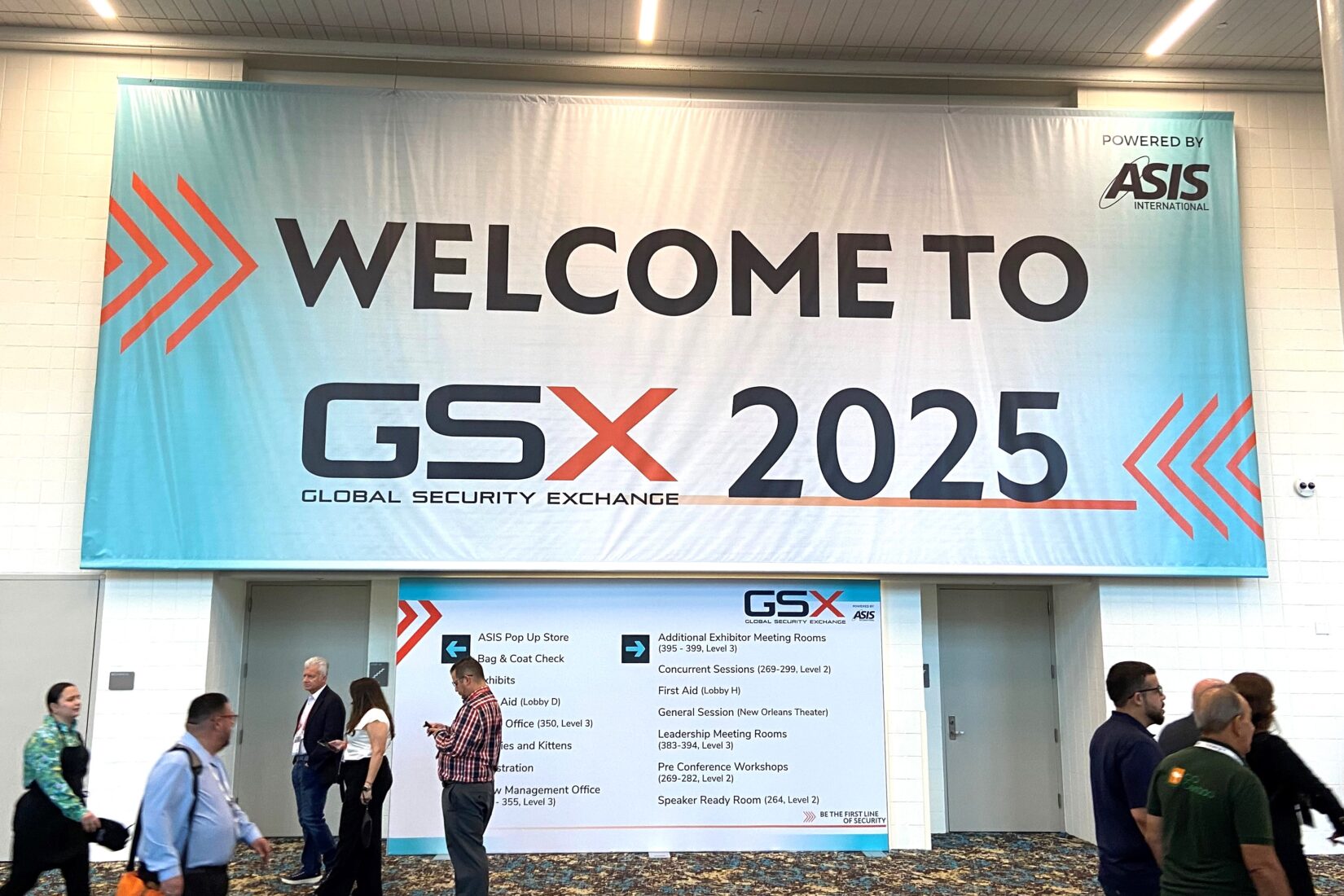
The 2025 GSX Conference in New Orleans reaffirmed what many in the security industry have anticipated: artificial intelligence (AI) is no longer a distant promise or a set of buzzwords – it is becoming a tangible, practical force reshaping the security landscape. Unlike in years past, when AI was often discussed in abstract or speculative terms, this year’s conversations reflected a more mature, implementation-focused dialogue. Vendors and practitioners alike are moving beyond hype, demonstrating how AI can meaningfully augment the human element rather than replace it.
At Shen Milsom & Wilke (SM&W), our subject matter experts see the most significant value of AI when it’s deployed in partnership with people, enhancing operator capabilities, strengthening situational awareness, and enabling faster, more effective decision-making. We are excited to help organizations better understand the impact of adopting these tools for their operations.
Where AI is Delivering Measurable Impact
Technologies in Focus:
– Facial Recognition & Biometrics – advancing identity verification and management with speed and precision.
– Video Analytics – transforming raw footage into actionable insights in real time.
– Fingerprint & Access Control Systems – now integrated with AI for greater reliability and reduced friction.
Operational Processes Enhanced by AI
– Anomaly & Pattern Detection – rapidly identifying events that might otherwise go unnoticed.
– Predictive Analytics – anticipating incidents before they occur by leveraging historical and external data.
– Metadata Analysis – enabling operators to sift through vast volumes of information in seconds rather than hours.
– ROI – empowers security management staff to more effectively substantiate return on investment for budgeting needs and share insights with other business groups for operational use
Benefits Observed
– Improved staff efficiency and decision-making support.
– Significant reductions in nuisance and false alarms.
– Faster detection of emerging threats.
– Quicker operator response times enabled by detailed, context-rich alerts.
– More efficient transfer of relevant information for non-security business groups.
The net effect: AI is not replacing security professionals, it’s empowering them with sharper tools to manage complexity, reduce fatigue, and focus on the most critical threats.

Beyond AI: Additional Trends to Watch
While AI dominated much of the discussion, GSX also showcased other transformative developments shaping the future of security:
– Hybrid Security Architectures – organizations are increasingly adopting on-premises systems enhanced by cloud capabilities, striking a balance between scalability, integration, and data sovereignty.
– Drone Applications – deployments with operator-to-drone ratios as low as 1:3 demonstrated how unmanned systems are accelerating alarm verification, incident investigation, and more rapid response.
– New Standards in School Security – educational sessions highlighted the ANSI-approved ASIS International School Security Standard for K–12 environments, establishing a long-needed framework to strengthen protection for students, faculty, and staff.
Looking Ahead to 2026
GSX 2025 was a clear reminder that the security industry is at an inflection point. AI is moving from promise to practice, drones are carving out a legitimate role in day-to-day operations, and hybrid/cloud systems are reshaping infrastructure strategy. For practitioners, integrators, and end users alike, the challenge in 2026 will be to harness these advancements thoughtfully, integrating technology in ways that amplify human performance and deliver measurable improvements in safety, resilience, and strategic value.
All in all, GSX 2025 offered a rich exchange of ideas, solutions, and forward-looking innovations that leave the industry professionals both optimistic and energized for what’s ahead.